
Inventory Management Tips for Small Motels
Mastering the Maze: Inventory Management Tips for Motels in the USA
For small motel owners across the United States, the art of hospitality is often a balancing act. Small motel proprietors frequently assume multifaceted roles, encompassing concierge services, housekeeping duties, maintenance oversight, and accounting responsibilities. While guest satisfaction is the cornerstone of a successful enterprise, effective inventory management acts as the essential “circulatory system,” supporting operational efficiency.
Effective inventory management can be the difference between a seamless guest experience and a stressful morning spent rushing to find extra towels or realizing you’re out of high-demand toiletries. Operating a smaller property provides a distinct advantage, allowing for greater agility and attention to detail compared to larger resorts. Here is how to master your inventory management and tips to boost your bottom line and your guest reviews.
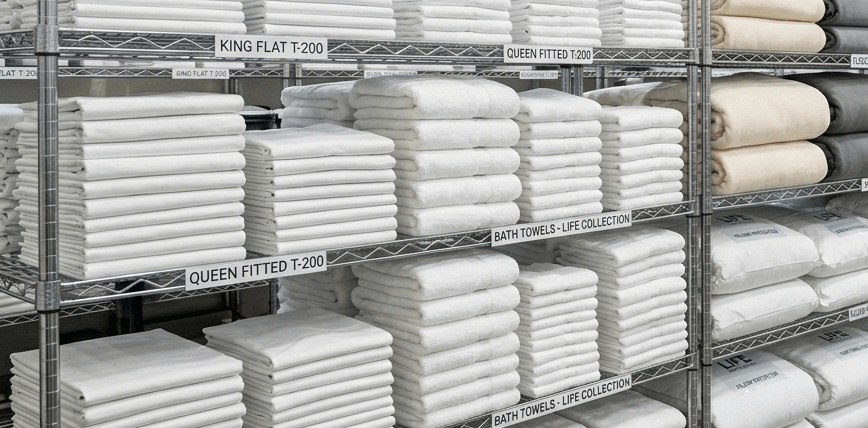
1. Implement the “Par Level” System: The foundation of hospitality inventory is the “Par Level”—the minimum amount of inventory needed to meet your needs for a specific period. For linens and bedding, the gold standard is 3-Par:
- One set in the guest room.
- One set in the laundry.
- One set in storage (the “safety net”).
Adherence to a 3-Par system ensures that, even during periods of peak occupancy with consecutive check-ins, housekeeping personnel will not experience delays due to awaiting dryer cycles before room turnaround. If you are looking to restock, high-quality options like the T-200 Plain or Stripe series provide the durability needed to survive the frequent laundering cycles typical of the US motel industry.
2. Categorize for Clarity
Small motels often suffer from “closet clutter. When all items are stored in a single location, inventory can be misplaced, or, even worse, overstocked. Break your inventory into functional categories:
- Bedding & Linens: Sheets, pillowcases, and protectors.
- Bath Essentials: Towels, bath mats, and shower curtains.
- Guest Amenities: Deodorant sticks, lotions, and soaps.
- Maintenance & Janitorial: Cleaning chemicals, paper products, and trash liners.
By categorizing, you can perform “mini-audits” on specific sections without feeling overwhelmed by the entire property’s stock.
3. Prioritize High-Turnover Amenities : Small details leave the biggest impressions. In the current social media landscape, guests are increasingly attentive to the provision of premium amenities within motels. However, these items experience a higher consumption rate.
Items like Lotion Tubes or Deodorant Sticks are essential personal care items that guests frequently forget. Stocking these items in bulk, such as cases of 144 or 288, lowers your per-unit cost and ensures you never run out of those “hero items” that guests appreciate.

4.Utilizing Digital Tracking Systems in Conjunction with a Physical Log
While large hotel chains utilize expensive ERP software, smaller motels can achieve success with affordable options such as cloud-based spreadsheets or inventory applications. The key is consistency.
- The Weekly Count: Assign one morning a week to count high-value items.
- The Check-In/Check-Out Method: Document all staff member removals of items from main storage.
This data helps you identify patterns. Do you go through twice as many bath mats in the winter? Does the local festival in July mean you need to double your order of coffee stirrers and cups? Data-driven ordering prevents the “emergency shipping” fees that eat into your profits.
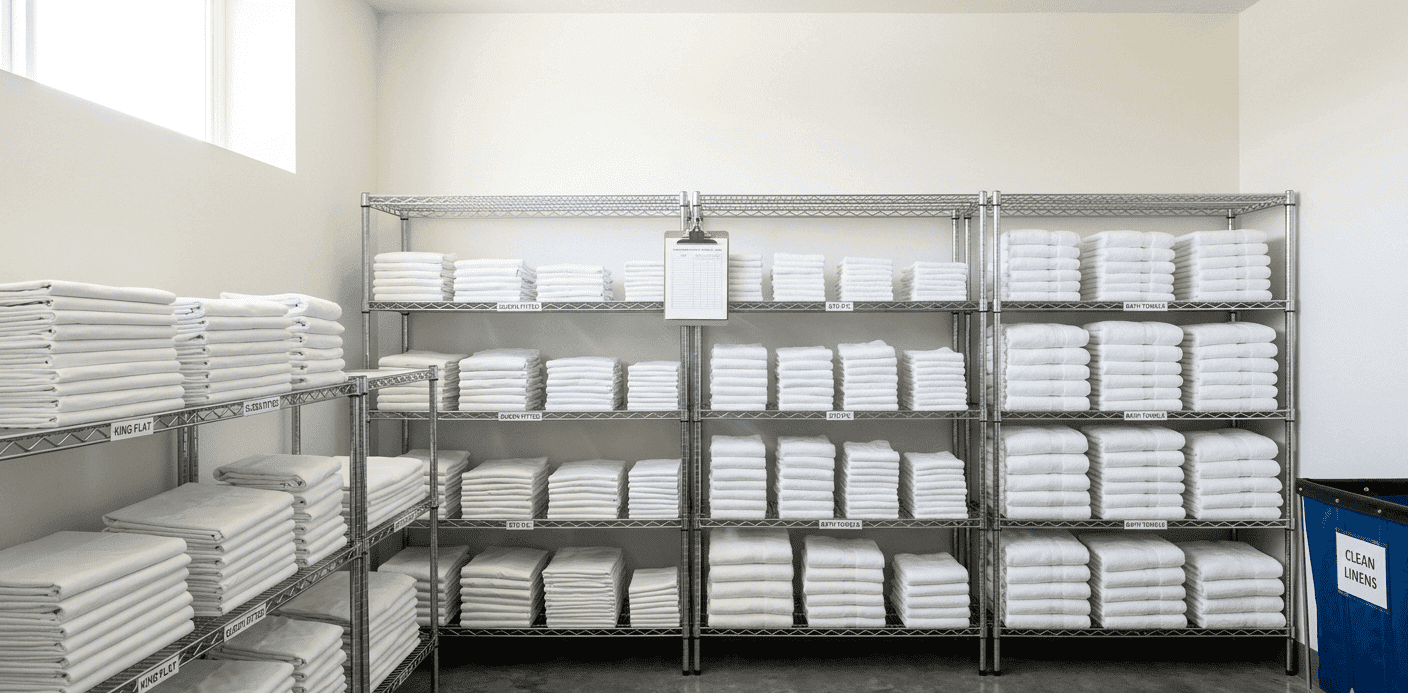
5. Centralize and Organize Storage: The dispersal of inventory across multiple buildings or floors can substantially complicate effective tracking. Centralize your bulk stock in one climate-controlled area.
- First-In, First-Out (FIFO): This is a classic management rule. Use your oldest stock first to prevent linens from yellowing or liquids (like cleaning chemicals or lotions) from settling or losing potency.
- Visual Cues: Implement the use of clear bins and clear labeling. For instance, if the tissue box holder stack appears low when viewed from the doorway, it’s a clear signal to place the next order.
6. Build a Relationship with a Reliable Vendor: Small motels often fall into the trap of buying retail from big-box stores. This is a mistake for two reasons: inconsistency and cost. Retail products change packaging and quality frequently. For a professional look, you want your T-200 sheets to match every single time.
Establish partnerships with specialized vendors, such as Life Hotel Supply, to gain access to commercial-grade products, including the Rev Series office chairs for business areas and bulk laundry ties. All are crafted to meet the specific needs of the hospitality industry.
7. Audit the “Hidden” Inventory: Inventory isn’t just what’s in the boxes; it’s what’s in the rooms. Periodically audit the condition of your “fixed” inventory:
- Are the Acrylic Kleenex Box Holders cracked?
- Are the bath mats showing signs of fraying at the cam border?
- Do the office tables in your guest rooms have chips that need repair?
A proactive inventory management strategy is demonstrated by the timely replacement of these items, preventing potential guest complaints. It maintains the “perceived value” of your rooms, allowing you to maintain higher ADR (Average Daily Rate).

Conclusion: Efficiency is the New Luxury
For a small motel in the US, luxury isn’t always about gold-plated faucets; it’s about the luxury of a seamless, well-prepared stay. Effective inventory management leads to a calmer staff, happier guests, and a more profitable business.
By implementing par levels, staying organized with a trusted supplier, and watching your data, you turn the “back of the house” into a well-oiled machine.