
Reducing Housekeeping Costs Without Lowering Quality.

The Hidden Bottom Line:
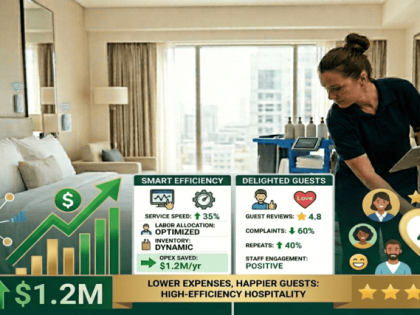
Within hospitality, housekeeping is often viewed as a “cost center,” using significant resources without directly generating revenue. However, any seasoned hotelier knows that housekeeping is the heartbeat of guest satisfaction. A single stray hair or a dusty corner can undo thousands of dollars spent on marketing and high-end lobby decor.
The challenge, then, is a delicate balancing act: “How do you trim the budget without compromising the “wow” factor of a pristine room ?“
Optimizing housekeeping costs isn’t about cutting corners; it’s about sharpening your processes. By focusing on efficiency, smart procurement, and staff empowerment, you can protect your bottom line while elevating your service standards. Here is how to master the art of cost-effective, high-quality housekeeping.
1. Optimize Labor Through Smart Scheduling: Labor is the largest expense in any housekeeping budget. Traditional scheduling often relies on static “rules of thumb” that don’t account for the reality of daily operations.
- Occupancy-Based Staffing: Instead of a fixed roster, align your staffing levels with real-time occupancy data. Use your Property Management System (PMS) to forecast “heavy” vs. “light” days.
- Segment Your Cleaning Times: Not every room takes the same amount of time. A “stayover” (where the guest is staying another night) requires significantly less labor than a “check-out” (a full turnover). Equipping the team to differentiate these requirements will help to avoid the over-allocation of labor resources.
- Cross-Training: Train your staff in multiple roles. A public area attendant who can step in to help with laundry during peak times prevents the need for expensive last-minute temporary labor.
2. Invest in High-Quality Supplies to Save Long-Term: It is tempting to buy the cheapest cleaning chemicals or linens available, but this is a classic “false economy.” Cheap chemicals often require more “elbow grease” and time to work, increasing labor costs. Conversely, sourcing from specialized providers like Life Hotel Supply ensures you are using professional-grade products designed for efficiency.
- Concentrated Chemicals: Using dilution control systems prevents staff from “glug-glugging” expensive chemicals into buckets, ensuring the perfect mix every time and reducing waste by up to 30%.
- Microfiber Technology: Superior-quality microfiber cloths and mops effectively capture more dirt while requiring fewer chemicals. Furthermore, they can withstand numerous wash cycles, thereby surpassing the durability of conventional cotton alternatives.

3. Implement Preventative Maintenance: Housekeeping and Maintenance should be two sides of the same coin. When a housekeeping professional overlooks a leaking faucet or a frayed carpet edge, the initial minor issue can escalate into a significant, costly repair or necessitate a guest refund.
Equip your team with a simple digital checklist. If a room attendant notices a slow-draining sink while cleaning, they should be able to flag it immediately using a mobile app. Fixing a leak today costs pennies; replacing a water-damaged floor tomorrow costs thousands.
4. Master the “Art of the Cart”: Efficiency diminishes when room attendants make unnecessary trips to the supply room. The time expended in retrieving a forgotten amenity or fresh duvet cover represents a financial inefficiency.
- Standardized Cart Loading: Guarantee consistent cart setups every morning. This approach ensures that everything—from towels to glass cleaner—is within arm’s reach.
- Inventory Tracking: Use a “par level” system. By knowing exactly how much stock is on each floor, you prevent “hoarding,” which ties up your cash flow in unused inventory sitting in dark closets.
5. Leverage Sustainability as a Cost-Saver: Green initiatives are one of the rare areas where “doing good” and “saving money” perfectly align.
- Linen Reuse Programs: Encourage guests to reuse towels and sheets. When messaging emphasizes environmental benefits, guest participation is readily observed. This approach substantially reduces water, electricity, and chemical expenses within the laundry facility.
- Energy Management: Staff training should emphasize closing curtains during daylight hours to reduce heat gain, which lowers air conditioning expenses. They should also ensure all lights and electronic devices are switched off upon room departure.

The Professional Edge: Ergonomics and Comfort: While we focus on the rooms, we must also focus on the people. Housekeeping is physically demanding work. Providing an ergonomic environment—including proper seating in breakrooms or administrative offices—reduces staff fatigue and turnover.
In your back-office or management areas, consider chairs with 3D Adjustable Armrests and Synchro Mechanisms with multi-position locks. A comfortable team is a productive team, and reducing turnover is perhaps the single most effective way to keep your long-term housekeeping costs down.
Conclusion: Quality is the Ultimate Savings
Reducing costs in housekeeping is a marathon, not a sprint. It requires a culture of “continuous improvement” where every staff member understands their role in the hotel’s financial health. By streamlining your supply chain through partners like Life Hotel Supply, embracing technology, and respecting the time and effort of your staff, you create a department that isn’t just a “cost,” but a competitive advantage.
Ready to optimize your operations? Start by auditing your current cleaning times and supply waste. You may be astonished to discover the latent profitability within the folds of a fresh towel.
Key Takeaways for Hotel Managers:
- Forecast, don’t guess: Use data to drive your staff schedules.
- Bulk buy strategically: High-quality supplies last longer and work faster.
- Empower through tech: Use digital checklists for instant maintenance reporting.
- Green is gold: Sustainable practices are direct hits to utility bill savings.